Open data you can aggregate directly — no ETL, no prep work
Queria is a data catalogue that publishes its data as a database. No download, no conversion — connect straight from the browser, Python, your BI tool or an AI agent. You never hold a copy, so what you query is always current.
No sign-in required. Query it as it is, and export to CSV, Parquet or Excel whenever you need a copy.
Across every publisher
You don't have to know who published it
Usually the only clues you get are a file name and a description. Queria searches across publishers at the table and the column level. Every hit carries its type, and where the publisher documented a meaning that shows too — so you can tell whether it fits before you open it.
A column search for 人口 (population) — Tokyo, the national land ministry and the city of Tsukuba in one result
Try a column searchReady to use
The prep work is already done
We align encodings, column names and units, fill in coordinates from the address when a facility has none, absorb gaps and inconsistencies, and ship the meaning and unit of every column with the data. Nobody has to write that same preprocessing again.
XX City Evacuation Sites (as of April 2026)
* Updated every April. Contact the division about the Notes column.
ID,Facility,,Address,Notes
,,Short name,,
1.30E+09,XX Elementary School,XX ELEM,120 Main Street,Gymnasium
1.30E+09,XX Middle School,,45 Oak Ave.,-
1.30E+09,XX Community Center,,-,-
| idfacility ID | namefacility name | addressstreet address | latlatitude | lonlongitude |
|---|---|---|---|---|
| 1301000012 | XX Elementary School | 120 Main St | 40.7128 | -74.0060 |
| 1301000013 | XX Middle School | 45 Oak Ave | 40.7061 | -73.9969 |
| 1301000014 | XX Community Center | NULL | NULL | NULL |
Combine them
Data from separate publishers becomes one table
Two publishers can describe the same municipality with different column names and a different number of digits in the code. Queria aligns that as the data is loaded, so data published separately lines up as it is.
- 市区町村コード
- 27216
- 高齢化率(2050)
- 52.6%
- 市区町村コード
- 27216
- サービスの種類
- 訪問介護
matched on the same municipality code, then counted
- 市区町村
- 大阪府 河内長野市
- 高齢化率(2050)
- 52.6%
- 訪問介護の事業所数
- 48
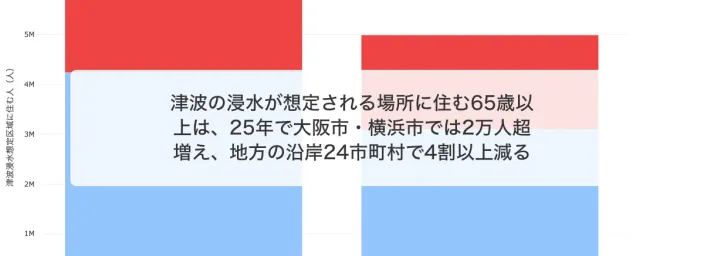
Population projections from the land ministry matched against care-service providers from the health ministry, on the municipality code. Every value is taken from data published on Queria today.
Read analyses that span publishersYour own tools
No ETL, from anywhere
Everything is published as a database rather than as files, so there is nothing to convert and nothing to load. The same data, the same SQL, wherever you work.
uvx queria sql "SELECT * FROM calendar.main.mart_calendar LIMIT 10"Each dataset refreshes on its own published schedule. The connection never changes, so the next time you open it you are already on the new data. Every dataset card shows when it was last updated, and the refresh schedule wherever the publisher declared one.
See how to connectFor publishers
What you publish gets used as it is
The preprocessing every user used to write on their own gets done once, on the publishing side. That is what publishing on Queria means: the job does not end at publication — what happens next changes.
Usable the moment it lands
Column names and units arrive aligned, so people can use the data without downloading or reshaping it.
Alongside other publishers
Municipality codes and coordinates line up, so datasets published separately can be joined together.
You can see it being used
We measure how much your data is used and report it back, so you can judge what publishing is worth.
Open to everyone, right now
Working with open data is free for individuals, and the source is public. Even without signing in, you can look inside a dataset and aggregate it right there.
The aggregation runs in DuckDB on your side. There is no query server on ours, so wider use does not raise what it costs us to run — which is why we can keep it open and free.